

Author: webmaster

The CIO’s Roadmap to Digital Transformation: Where to Invest for Maximum Business Impact

TheCIOsRoadmaptoDigitalTransformatio
Cloudserve Technologies

Blogs

The CIO's Roadmap to Digital Transformation: Where to Invest for Maximum Business Impact

Digital transformation remains one of the most important priorities for business leaders worldwide. Yet many organizations continue to struggle with technology investments that fail to deliver expected outcomes.

The challenge is rarely the technology itself. The challenge lies in aligning technology initiatives with business objectives, operational priorities, and long-term growth strategies.

For CIOs, CTOs, and executive leadership teams, successful digital transformation requires a clear roadmap focused on measurable business value rather than technology adoption alone.

The Shift from Technology Projects to Business Transformation

Digital transformation is no longer about implementing isolated technologies. It involves reimagining how organizations operate, serve customers, empower employees, and create competitive advantage.

Successful organizations focus on outcomes such as:

Strategic Investment Areas for 2026 and Beyond

Cloud and Infrastructure Modernization

Modern infrastructure provides the scalability, flexibility, and resilience necessary to support future growth.

Cybersecurity and Risk Management

As digital adoption increases, cybersecurity becomes a foundational business requirement.

Digital Workplace Transformation

Employee productivity and collaboration directly influence organizational performance.

Data Visibility and Operational Intelligence

Organizations need real-time insights to support informed decision-making.

Managed Services and Operational Excellence

Reducing operational complexity enables internal teams to focus on innovation and strategic initiatives.

Business Continuity and Resilience

Organizations must prepare for disruptions while maintaining critical operations and customer commitments.

Common Digital Transformation Challenges

Organizations that address these challenges proactively achieve significantly better transformation outcomes.

Executive Insight

Digital transformation should not begin with technology selection. It should begin with business objectives.

The most successful organizations prioritize initiatives that create measurable business value while establishing a scalable foundation for future innovation.

Technology becomes most powerful when it serves as an enabler of business strategy.

How Cloudserve Can Help

Cloudserve helps organizations develop and execute practical digital transformation strategies through:

  • Strategic Consulting
  • Infrastructure Modernization
  • Cloud Transformation
  • Cybersecurity Services
  • Digital Workplace Solutions
  • Managed Services
  • Technology Assessments

Our experts help organizations align technology investments with business goals, reduce transformation risk, and accelerate value realization.

Looking to accelerate your digital transformation journey?

Contact Cloudserve today to schedule a Digital Transformation Strategy Consultation.
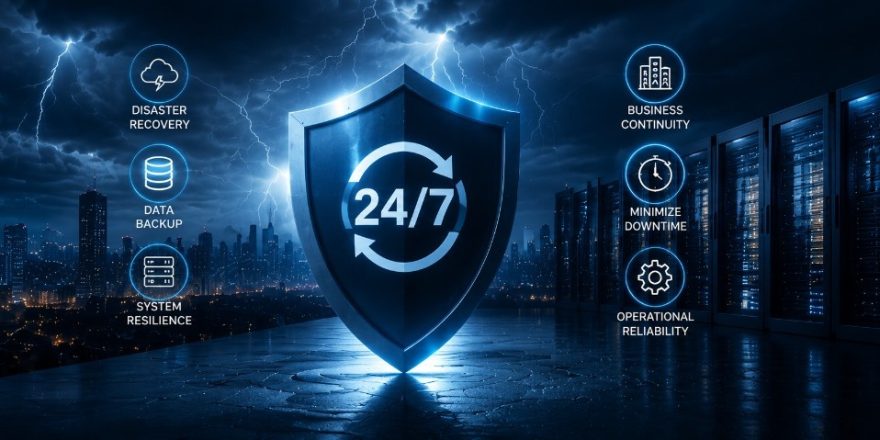
Business Continuity Starts with Infrastructure Resilience: Lessons from Recent Global Outages

Business Continuity Starts with Infrastructure Resilience Lessons from Recent Global Outages
Cloudserve Technologies

Blogs

Business Continuity Starts with Infrastructure Resilience: Lessons from Recent Global Outages

Recent global technology outages have demonstrated a critical reality: infrastructure resilience is no longer optional. Organizations across industries experienced disruptions affecting operations, customer services, communications, and revenue generation.

Business continuity is often associated with disaster recovery plans and backup systems. However, true resilience begins much earlier—with the design, management, security, and reliability of the underlying technology infrastructure.

Today’s business leaders must ensure their organizations can withstand disruptions, recover quickly, and maintain critical operations regardless of unexpected events.

Understanding Infrastructure Resilience

Infrastructure resilience refers to an organization's ability to:

Resilience encompasses infrastructure, networks, cloud environments, security controls, applications, and operational processes.

Common Causes of Business Disruptions

Infrastructure Failures

Hardware failures, aging systems, and inadequate capacity planning continue to impact business operations.

Cybersecurity Incidents

Ransomware, denial-of-service attacks, and security breaches can severely disrupt critical services.

Cloud and Service Provider Dependencies

Organizations increasingly depend on third-party platforms that can become single points of failure.

Human Error

Configuration mistakes and operational oversights remain significant contributors to downtime.

Building a Resilient Technology Environment

Executive Insight

Infrastructure resilience is not an IT metric—it is a business capability. Organizations that invest in resilient infrastructure consistently experience lower operational risk, improved customer trust, and greater business agility.

The ability to remain operational during disruptions increasingly defines competitive advantage.

How Cloudserve Can Help

Cloudserve delivers infrastructure resilience solutions through:

  • Infrastructure Assessments
  • Datacenter Management
  • Managed Cloud Services
  • Monitoring Systems
  • Disaster Recovery Planning
  • Cybersecurity Services
  • Managed IT Operations

We help organizations identify vulnerabilities, improve operational resilience, and create technology environments capable of supporting uninterrupted business operations.

Is your infrastructure prepared for the unexpected?

Contact Cloudserve today to schedule an Infrastructure Resilience Assessment.

Building a Digital Workplace That Employees Actually Love to Use

BuildingaDigitalWorkplaceThatEmployeesActuallyLovetoUs
Cloudserve Technologies

Blogs

Building a Digital Workplace That Employees Actually Love to Use

The workplace has undergone a fundamental transformation. Employees today expect the same seamless digital experiences at work that they enjoy as consumers. Whether operating from corporate offices, remote locations, customer sites, or hybrid environments, workforce productivity increasingly depends on the quality of the digital workplace experience.

For business leaders, creating an effective digital workplace is no longer simply an IT initiative—it is a strategic investment in employee engagement, operational efficiency, talent retention, and business performance.

Organizations that prioritize employee experience through technology consistently outperform peers in productivity, collaboration, innovation, and workforce satisfaction.

The Evolution of the Digital Workplace

Traditional workplace models were built around fixed locations, office-bound systems, and fragmented communication tools. Today's workforce requires:

Modern employees expect technology to enable productivity rather than create obstacles.

Key Components of a Successful Digital Workplace

Digital Employee Experience

Technology should empower employees rather than frustrate them. Organizations must prioritize usability, accessibility, and performance.

Unified Endpoint Management (UEM)

Managing laptops, mobile devices, tablets, and endpoints through a centralized framework improves security, compliance, and operational efficiency.

Virtual Desktop Infrastructure (VDI)

VDI enables secure access to applications and data regardless of location while simplifying management and improving business continuity.

Collaboration Platforms

Modern collaboration tools improve communication, decision-making, and team engagement across distributed workforces.

Security Without Complexity

Strong security controls must operate transparently without creating barriers to productivity.

Executive Insight

Organizations often invest heavily in customer experience while overlooking employee experience. However, engaged and productive employees directly contribute to improved customer satisfaction, operational efficiency, and business outcomes.

The most successful digital workplace initiatives focus equally on people, processes, and technology.

How Cloudserve Can Help

Cloudserve helps organizations design and implement secure, scalable, and user-centric digital workplace environments through:

  • Digital Employee Experience Solutions
  • Unified Endpoint Management
  • Virtual Desktop Infrastructure
  • End User Computing Services
  • Hybrid Workplace Enablement
  • Collaboration Technologies

Our solutions help organizations improve workforce productivity, strengthen security, and create exceptional workplace experiences that support modern business objectives.

Ready to modernize your workplace experience?

Contact Cloudserve today to discuss your Digital Workplace Transformation Strategy.

Managed IT Services vs In-House IT Teams: Finding the Right Operating Model

ManagedITServicesvsIn-HouseITTeam
Cloudserve Technologies

Blogs

Managed IT Services vs In-House IT Teams: Finding the Right Operating Model

As technology environments become increasingly complex, organizations face a critical question: Should IT operations be managed internally, outsourced, or delivered through a hybrid model?

The answer depends on business objectives, available resources, operational complexity, security requirements, and growth plans.

Many organizations are discovering that Managed IT Services provide a practical way to access specialized expertise, improve operational performance, and reduce technology management overhead.

The Challenges of an In-House-Only Model

The Benefits of Managed Services

Proactive Monitoring

Issues are identified and resolved before they impact operations.

Access to Specialized Expertise

Organizations gain immediate access to experienced technology professionals.

Predictable
Costs

Managed services provide greater budget visibility and cost control.

Enhanced
Security

Continuous monitoring improves threat detection and response capabilities.

Executive Insight

The most successful organizations often adopt a hybrid model where internal teams focus on innovation and business strategy while managed service providers oversee operational execution and continuous monitoring.

How Cloudserve Can Help

Cloudserve provides comprehensive Managed Services across infrastructure, cloud environments, cybersecurity, networking, service desk operations, and business continuity planning.

Our flexible engagement models help organizations improve efficiency, reduce operational risk, and maximize technology value.

Explore how managed services can strengthen your IT operations.

Contact Cloudserve today to discuss a customized Managed Services strategy.

Cybersecurity in 2026: The Top Risks Every Business Leader Should Be Preparing For

TheTopRisksEveryBusinessLeaderShouldBePreparingFo
Cloudserve Technologies

Blogs

Cybersecurity in 2026: The Top Risks Every Business Leader Should Be Preparing For

Cybersecurity has evolved from an IT concern into a critical business priority. As organizations become increasingly digital, cyber threats continue to grow in sophistication, frequency, and business impact.

For today’s executive leadership teams, cybersecurity is directly linked to operational resilience, customer trust, regulatory compliance, and enterprise reputation.

The question is no longer whether an attack will occur, but how prepared the organization is to detect, respond, and recover.

Top Cybersecurity Risks in 2026

AI-Powered Cyber Attacks

Threat actors are leveraging artificial intelligence to automate reconnaissance, phishing campaigns, and attack execution.

Ransomware Evolution

Modern ransomware attacks focus on operational disruption, data theft, and reputational damage.

Supply Chain Vulnerabilities

Third-party vendors and technology partners remain one of the most significant attack vectors.

Insider Threats

Both malicious and accidental insider actions continue to expose organizations to substantial risk.

Cloud Security Misconfigurations

Rapid cloud adoption often creates governance gaps and security vulnerabilities.

Executive Insight

Cybersecurity should be viewed as a business resilience strategy rather than a technology expense. Organizations that invest in proactive risk management consistently experience lower incident impact and faster recovery times.

How Cloudserve Can Help

Cloudserve delivers comprehensive cybersecurity services including:

Our security experts help organizations identify risks, strengthen defenses, and improve cyber resilience across the enterprise.

Discover your organization's cybersecurity readiness.

Contact Cloudserve today to schedule a Cyber Risk Assessment.

The Future of Hybrid IT: Why Enterprises Are Moving Beyond Traditional Infrastructure

TheFutureofHybridI
Cloudserve Technologies

Blogs

The Future of Hybrid IT: Why Enterprises Are Moving Beyond Traditional Infrastructure

The modern enterprise is no longer confined to a single datacenter or a single cloud provider. Business leaders are increasingly adopting Hybrid IT strategies that combine on-premises infrastructure, private cloud, public cloud, and edge computing environments to create greater flexibility, resilience, and operational efficiency.

As organizations accelerate digital transformation initiatives, traditional infrastructure models often struggle to meet evolving business demands. Today’s CIOs and CTOs require technology environments that support innovation, scalability, security, and business continuity without compromising governance or performance.

Why Hybrid IT is Becoming the Preferred Enterprise Model

Organizations are embracing Hybrid IT because it enables them to:

Rather than replacing existing investments, Hybrid IT allows organizations to maximize the value of both legacy and modern infrastructure.

Key Considerations for Successful Hybrid IT Adoption

Infrastructure Modernization

Legacy environments often require modernization to integrate effectively with cloud platforms and emerging technologies.

Security and Governance

Maintaining consistent security controls across multiple environments is critical to reducing risk and ensuring compliance.

Business Continuity

Hybrid architectures provide improved resilience through workload distribution, redundancy, and disaster recovery capabilities.

Cost Optimization

Strategic workload placement helps organizations control cloud spending while maximizing performance and operational efficiency.

Executive Insight

Organizations that treat Hybrid IT as a business transformation initiative—not merely an infrastructure project—are better positioned to achieve operational agility, accelerate innovation, and respond quickly to market changes.

How Cloudserve Can Help

Cloudserve helps organizations design, implement, optimize, and manage Hybrid IT environments tailored to business objectives. Our expertise spans cloud adoption, infrastructure modernization, datacenter transformation, network optimization, security integration, and managed operations.

We help organizations build future-ready infrastructure ecosystems that balance flexibility, performance, security, and cost efficiency.

Ready to evaluate your Hybrid IT strategy?

Contact Cloudserve today to schedule an Infrastructure Assessment and Transformation Consultation.